Polymarket Tops $1 Billion in Annualized Revenue as Sports Trading Goes Mainstream
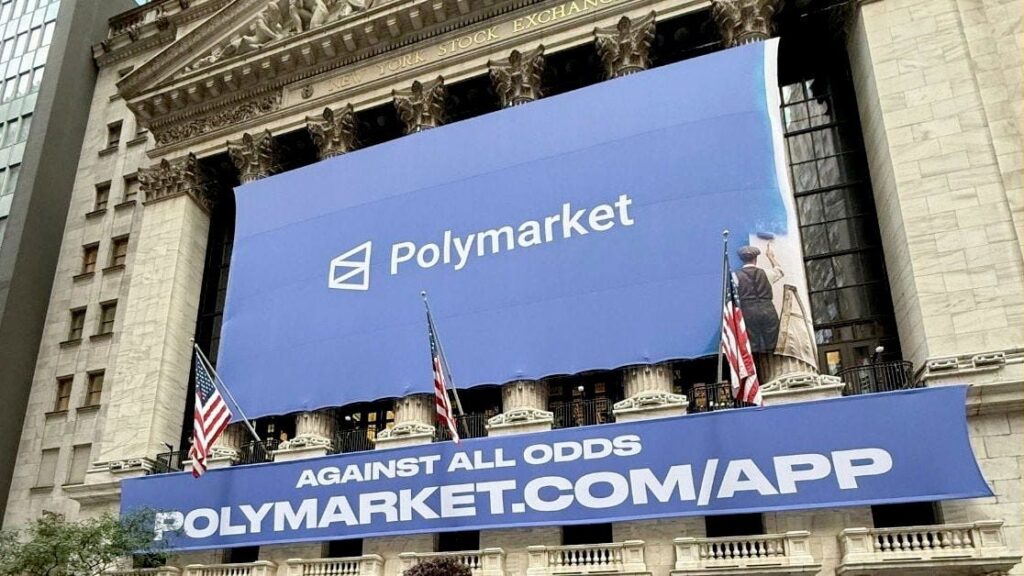
Polymarket and other prediction markets pose a major threat to sportsbook operators...
Prediction markets are no longer a niche crypto experiment—they’re becoming one of the biggest stories in sports betting.
According to Reuters, Polymarket has surpassed$1 billion in annualized revenue, underscoring the explosive growth of prediction markets as traders increasingly buy and sell contracts on everything from elections to sports and financial events.
For sports bettors, the timing is no coincidence.
The 2026 FIFA World Cup has fueled record trading activity across prediction markets, pushing daily volume on Polymarket’s international platform to all-time highs. Meanwhile, Polymarket’s newly launched U.S. exchange has seen daily trading volume jump from roughly $50 million in mid-May to more than $200 million by June 20, just weeks after opening to the public.
The World Cup Is Driving the Boom
Sports have become one of the biggest catalysts for prediction market growth.
World Cup futures have generated hundreds of millions of dollars in trading volume as users continuously buy and sell positions based on each match’s results. Unlike a traditional sportsbook, traders don’t have to wait until the tournament ends to realize profits.
If Argentina’s championship odds shorten after a big win, for example, traders can immediately sell their position and lock in gains. Likewise, bettors can cut losses if a team disappoints instead of riding a losing ticket all the way to elimination.
That flexibility is one of the biggest differences between prediction markets and sportsbooks.
Trading, Not Betting
Traditional sportsbooks operate against the customer.
You place a wager, the sportsbook sets the odds, and in most cases you’re locked into that position until the final whistle. While many sportsbooks now offer cash-out options, the bookmaker controls both when they’re available and the price you’ll receive.
Prediction markets work differently.
Platforms like Polymarket function as financial exchanges where users trade directly against one another. Each contract represents the probability of an outcome occurring, with prices moving continuously as new information enters the market.
Just like buying and selling a stock, traders can enter and exit positions whenever they choose—provided there’s enough liquidity.
For experienced bettors, that creates an entirely different strategy.
Instead of simply trying to pick winners, traders can capitalize on price movement itself.
Lower Fees, More Efficient Markets
Prediction markets have also attracted many professional bettors because transaction costs are generally much lower than the built-in margin sportsbooks charge through the vig.
Rather than betting into odds designed to favor the house, traders transact with one another while the platform earns revenue through commissions.
As liquidity increases, prices often become more efficient, particularly for major sporting events like the World Cup, NFL playoffs, or March Madness.
A New Era for U.S. Sports Trading
Polymarket’s rapid growth comes after years of regulatory uncertainty.
The company reached a settlement with U.S. regulators in 2022 that halted its American operations. Investigations by the CFTC and Department of Justice were later closed without charges, allowing Polymarket to launch a separate, fully regulated U.S. exchange earlier this year.
The international decentralized platform continues operating independently.
Although the U.S. platform currently offers only a mobile app, its early adoption suggests significant demand for exchange-style sports trading.
What It Means for Sportsbooks
Prediction markets are increasingly competing with traditional sportsbooks for the same customers.
Rather than simply placing wagers, bettors now have the option to actively trade positions throughout an event, often with greater flexibility and lower transaction costs.
That shift is already influencing the broader industry.
Several major sportsbook operators have explored launching their own prediction market products, while others continue monitoring the space as trading volumes climb.
Industry analysts generally believe prediction markets won’t replace sportsbooks overnight. Instead, they’re expanding the overall sports wagering ecosystem by attracting a new class of users interested in treating sports outcomes as tradable financial assets.
The Bottom Line
The line between sports betting and financial trading continues to blur.
Polymarket reaching $1 billion in annualized revenue is more than just a company milestone—it’s another sign that prediction markets are becoming a major force in the sports betting industry.
For bettors, the biggest change isn’t simply having another place to wager.
It’s having the ability to trade sports like a market, buying low, selling high, and managing positions in real time instead of waiting for the final score.